
- Treat aggregate benchmark curves as trend lines, not capability proofs—progress on the sum of evals is smooth while per-task performance stays jagged.
- Data availability, not architecture, is emerging as the binding constraint on frontier model improvement; plan evals and roadmaps around data pipelines accordingly.
- AI-driven acceleration of AI research is real but uneven: measure it task-by-task inside your own R&D workflow rather than trusting lab-wide productivity claims.
Topic: Recursive self-improvement (3)
Trend radar (14d)
Open trend radar
Claude
10ch · 21v
AI Agents
8ch · 10v
Anthropic
7ch · 11v
Claude Code
6ch · 14v
Coding Agents
6ch · 12v
OpenAI
5ch · 15v
AI coding agents
5ch · 6v
TypeScript
4ch · 7v
OpenRouter
4ch · 4v
Evals
3ch · 9v
Jev
3ch · 6v
Codex
3ch · 6v
LangGraph
3ch · 5v
JavaScript
3ch · 4v
Fable 5.2
3ch · 4v
subagents
3ch · 3v

- Recursive self-improvement is measurable but not explosive — METR's Anthropic R&D acceleration study and SemiAnalysis both point to gains in AI-assisted research that flatten rather than compound exponentially.
- Public benchmark saturation is now a first-order problem: Simple Bench no longer discriminates between frontier models, so evaluation must shift to meta-benchmarks and less-publicized task suites.
- Capability improvements that look marginal on aggregate scores can produce outsized real-world effects once they cross reliability thresholds for autonomous task completion.
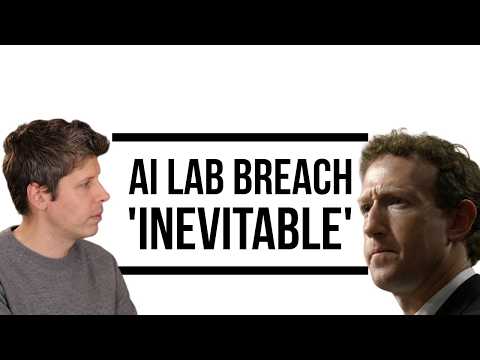
- Treat 'breach inevitable' as an architectural assumption: design for containment and blast-radius limits rather than relying on a pre-release gate that never fails.
- Lab risk statements are shaped by competitive positioning — read them as strategic signaling about pacing, not as neutral probability estimates.
- Iterative deployment keeps winning because each release funds the next compute budget; that loop, not any single capability jump, is what makes deceleration hard.