
- Deep Agents lean on file system primitives (ls, read, grep) as the agent's interface to its environment, so search and navigation keep the working context small instead of dumping whole documents into the prompt.
- Context is treated as a scarce resource: grepping for a clue rather than reading the entire diary is the tutorial's stand-in for retrieving only the relevant slice of a large corpus.
- A power cut forcing a new thread illustrates durable state — scratch space and long-term memory persist across sessions, while a thread is just one bounded run.
Topic: human-in-the-loop (4)
Trend radar (14d)
Open trend radar
Claude
10ch · 21v
AI Agents
8ch · 10v
Anthropic
7ch · 11v
Claude Code
6ch · 14v
Coding Agents
6ch · 12v
OpenAI
5ch · 15v
AI coding agents
5ch · 6v
TypeScript
4ch · 7v
OpenRouter
4ch · 4v
Evals
3ch · 9v
Jev
3ch · 6v
Codex
3ch · 6v
LangGraph
3ch · 5v
JavaScript
3ch · 4v
Fable 5.2
3ch · 4v
subagents
3ch · 3v
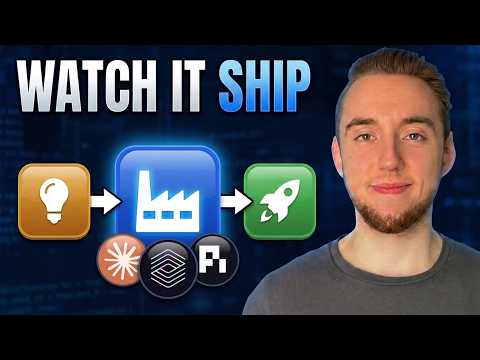
- Treat the AI software factory as an orchestration layer: intake, planning, task decomposition, implementation, validation, and escalation are distinct stages rather than one monolithic prompt.
- Break work into small independently checkable units so coding agents can build and verify each piece before integration.
- Automated checks are the control plane for autonomy; without verification gates, end-to-end generation is just faster rework.

- Scope tool credentials per action and environment; an agent should never inherit broad production database privileges just to complete a task.
- Insert human approval before irreversible or high-blast-radius actions, not merely after the agent proposes them.
- Apply network egress rules and service allowlists so agents cannot reach unintended internal systems or exfiltrate data.

- An AI software factory is an end-to-end delivery pipeline where agents can plan, code, review, and release; the important design choice is where humans remain as gates.
- Dark factories push autonomy furthest, while PR and release factories deliberately place human checkpoints at review or deployment boundaries.
- Fleet factories depend on orchestration and isolation so parallel agents do not collide, duplicate work, or create merge chaos.