
- The headline speedup matters less than equivalence: byte-for-byte output comparison gives a concrete correctness target for ports.
- Behavioral replay catches cross-language semantic differences, such as JavaScript counting emoji as two UTF-16 code units while the Rust port counted one.
- rust-anything gates AI-generated Rust against recorded behavior from the original implementation instead of trusting translation or normal unit tests alone.
Topic: JavaScript (4)
Trend radar (14d)
Open trend radar
Claude
10ch · 21v
AI Agents
8ch · 10v
Anthropic
7ch · 11v
Claude Code
6ch · 14v
Coding Agents
6ch · 12v
OpenAI
5ch · 15v
AI coding agents
5ch · 6v
TypeScript
4ch · 7v
OpenRouter
4ch · 4v
Evals
3ch · 9v
Jev
3ch · 6v
Codex
3ch · 6v
LangGraph
3ch · 5v
JavaScript
3ch · 4v
Fable 5.2
3ch · 4v
subagents
3ch · 3v

- rust-anything targets language-to-Rust ports by pairing AI coding agents with behavioral tests, profiling, and benchmarks rather than relying on code generation alone.
- MCP is the integration layer for driving agents such as Claude Code, OpenAI Codex, and Cursor through a migration and verification workflow.
- The claimed Prettier rewrite highlights performance upside, but semantic parity across Unicode, floating-point behavior, and edge cases is the real acceptance test.
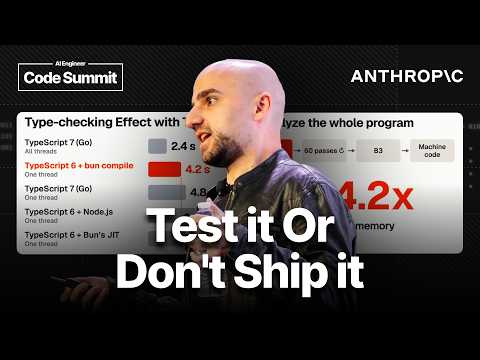
- Treat a legacy test suite as the contract: tests written before agents existed are the strongest signal that generated code preserves intended behavior.
- Keep multiple independent implementations (e.g. interpreter, JIT, and AOT paths) in agreement so differential testing catches divergence the agents introduce.
- Run agents in batches — generate broadly, then reconcile and fix — rather than expecting a single long pass to converge on correct code.

- Solid 2.0 is a genuine major bump after years of 1.x point releases — expect breaking changes, so pin versions and read the migration guide before touching production code.
- The core bet is unchanged: signals plus direct DOM updates, no virtual DOM diffing, so re-render cost stays proportional to what actually changed.
- Async is now a first-class concern in the reactive graph rather than something you wire up with effects and manual loading flags, which shrinks the surface area for race conditions.